What this document is
A single-page action instrument: what the County commits, what it receives, and the one action to authorise while the landfill permit cycle is open.
- The landfill is the constraint: a 1-year Special Use Permit, closure targeted for 2037, and no long-term certainty.
- One CSA: a $100/ton Beneficiation Fee, and a Circular Royalty™ of $17.52M in Year 2 growing to ~$874M gross over 30 years at Phase Initial.
- One action: execute an LOI/MOU and open the Joint Working Group.
Why this matters — what Carbotura is offering Johnson County
Johnson County’s residual is disposed at the WM Johnson County Landfill in Shawnee under a Special Use Permit renewed one year at a time, with closure targeted for 2037. The current disposal cost is low — ~$42/ton — but it carries no long-term certainty and no return. A 30-year Circular Supply Agreement replaces annual permit dependency with a perpetual framework and a growing royalty.
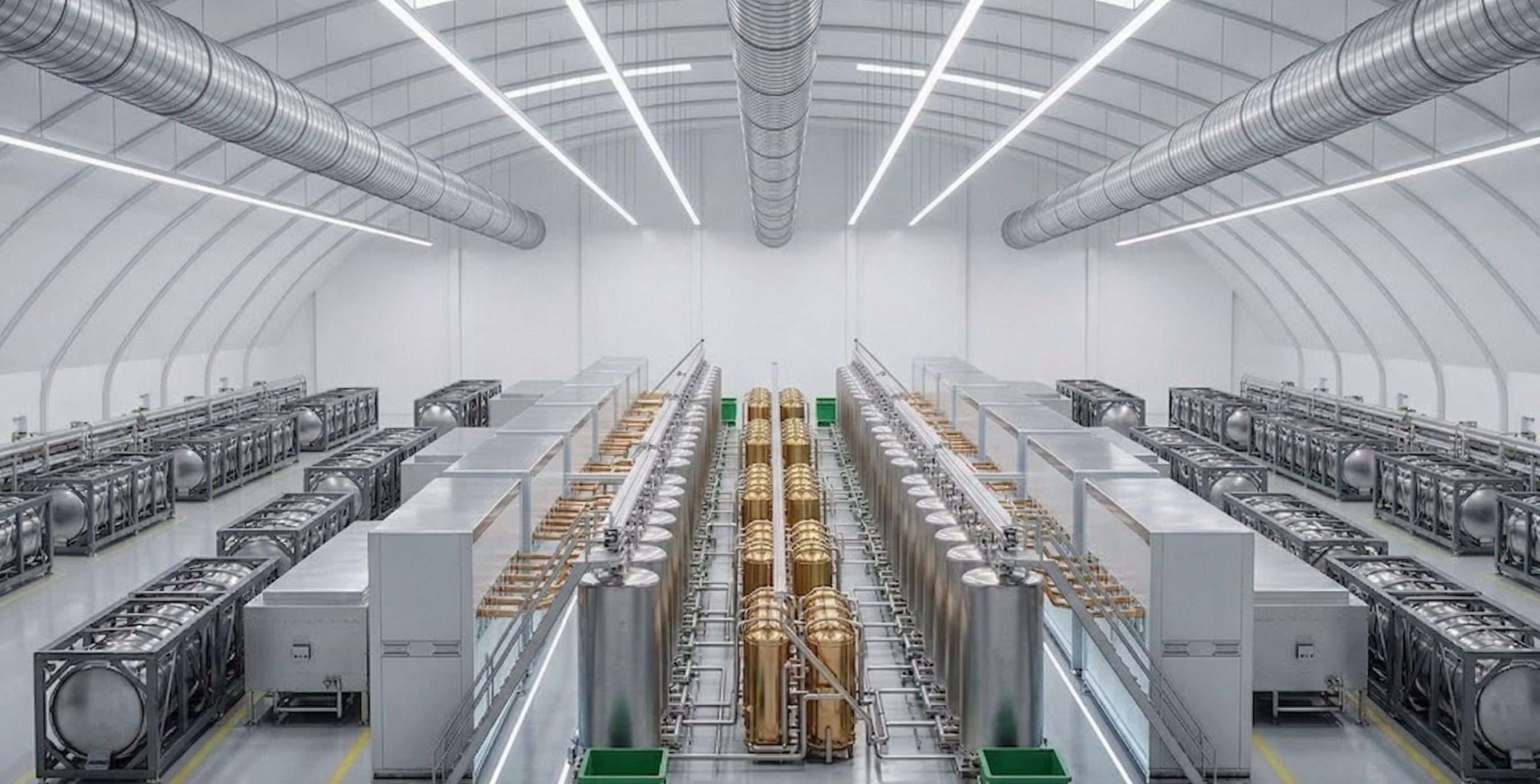
Carbotura converts the residual Johnson County currently buries into manufactured Circular Materials — synthetic graphite, graphene compounds, recovered minerals, plus net-positive ultrapure water — by primary elemental dissociation in an oxygen-free process. Not landfill, not incineration, not waste-to-energy: manufacturing.
The County’s disposal cost is estimated at $42/ton. The Beneficiation Fee is set at $100/ton, escalating 2.5%/yr — at Phase Initial (400 TPD, 146,000 TPY) that is $14.60M in Year 1. The case does not rest on displacing a low disposal cost; it rests on the royalty. Carbotura funds 100% of the facility; the County commits feedstock, not capital.
Beginning 13 months after the first Beneficiation Fee payment, the County receives a rolling monthly Circular Royalty™ — $17.52M in Year 2 at Phase Initial, 120% of that year’s fee, adding a percentage point every year. Over the 30-year term that is approximately $874M gross at Phase Initial and $2.62B at 1,200 TPD. Fee and royalty are two transactions and are shown separately throughout.
Why this fits
Annual permit renewal is a structural planning risk. A landfill that must be renewed every year cannot serve as the foundation for a 20-year waste infrastructure strategy. The 2037 closure target compounds this — Johnson County has a hard deadline and a fragile near-term pathway to reach it.
Johnson County currently pays approximately $42 per ton for disposal. The Circular Royalty™ pays $120 per ton from Year 2 — nearly three times the current disposal cost, returned to the County per ton of material processed. The fee structure costs more than current disposal in Year 1, but the royalty return from Year 2 reverses that relationship decisively.
Phase Initial at 400 TPD establishes the operating model. Phase Expanded at 1,200 TPD — the full Johnson County addressable volume — scales annual Circular Royalty™ returns proportionally. The CSA structure is designed to accommodate phase expansion without renegotiation of commercial terms.
The CSA locks the Beneficiation Fee with a predictable 2.5% annual escalator, establishes a structured royalty return stream, and runs for 30 years with perpetual continuation unless either party serves a 24-month Non-Renewal Notice. The 1-year SUP structure at WM Shawnee provides the opposite — no certainty, no runway, and a closure target that concentrates risk at 2037.
The structure, stated once
The Beneficiation Fee and the Circular Royalty™ are independent gross transactions with different payers. They are reported separately and never netted against one another.
The same physical mass is counted once in each of three dimensions — asset, revenue, attributes — and never summed as three independent masses.
Build-Own-Operate. Carbotura funds 100% of capital at every phase. The counterparty commits feedstock, not money.
One Circular Supply Agreement
+ Circular Royalty™
- Beneficiation Fee: $100–150/tonne · set at Term Sheet against the verified FWDC · 2.5%/yr escalator
- Circular Royalty™: 120% of the current-year Beneficiation Fee in Year 1 ($120–180/tonne), +1pp/yr, uncapped
- Royalty commencement: 13 months after the first Beneficiation Fee payment, rolling monthly on delivered tonnage
- Perpetual CSA, 30-year minimum term · Build-Own-Operate · zero counterparty capital
- Feedstock transfers under the CSA — ownership and liability pass at collection or delivery
- Accounting basis: US GAAP / GASB
The Johnson County Landfill is carried as an Exogenesis™ candidate — converting accumulated legacy material into a Legacy Remediation Royalty alongside the primary CSA. Subject to feedstock characterisation; not part of the base case.
Subject to characterisationKey figures at a glance
Circular Royalty™ projections by phase
Beneficiation Fee and Circular Royalty™ shown independently per the Separate Transaction Principle. No figure on this page nets one against the other.
| Capacity | Annual TPY | Beneficiation Fee · Year 1 | Circular Royalty™ · Year 1 basis | 30-Year Gross Royalty | Direct FTE |
|---|---|---|---|---|---|
| 400 TPD ← Phase Initial | 146,000 | $14.60M | $17.52M | ~$874M ESTIMATED | ~100 |
| 1,200 TPD · Phase Expanded | 438,000 | $43.80M | $52.56M | ~$2.62B ESTIMATED | 144 |
FWDC $42/ton ESTIMATED. Beneficiation Fee $100/ton. Circular Royalty™ (Year n) = (120% + (n−1)pp) × that year’s Beneficiation Fee; payments commence 13 months after the first fee payment and roll monthly. 30-Year Gross Royalty is gross royalty over 30 payments. Fee and royalty are independent gross transactions and are not netted anywhere in this document.